UCC Data Literacy Week 2026: Trust, Equity and Evidence Must Guide Ghana’s Digital Future – NDPC DG Urges
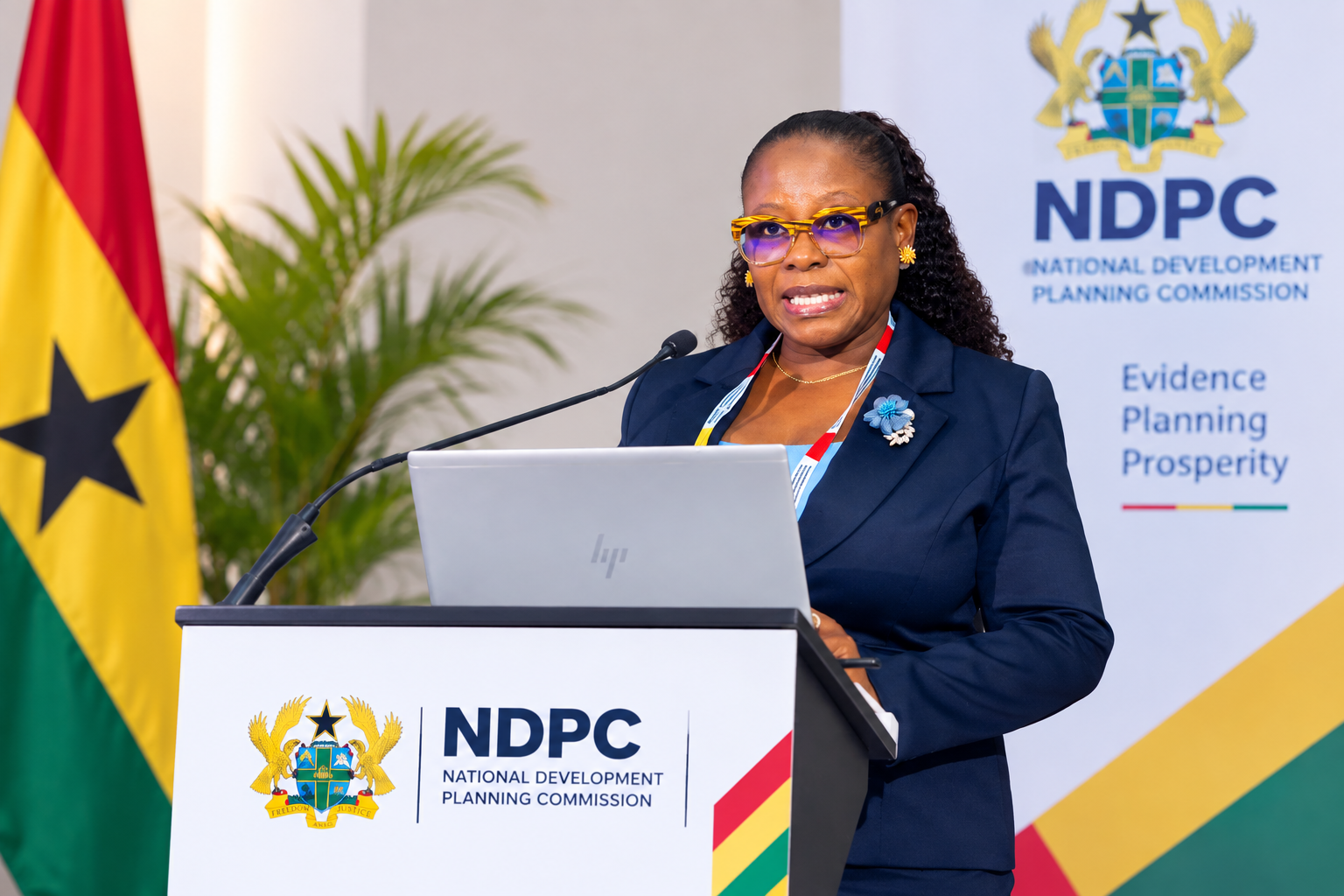
The Director-General of the National Development Planning Commission (NDPC), Dr. Audrey Smock Amoah, has called for greater use of data and evidence in national development discourse, stressing that policymaking and service delivery must be guided by reliable data.
Delivering the keynote address at the launch of the 2026 University of Cape Coast (UCC) Data Literacy Week on the theme, “Building a Data-Smart Ghana: Evidence, Ethics and Inclusion,” Dr. Amoah urged stakeholders to foster a national culture where data is trusted, protected and used to advance the public good.
“Ghana is sitting on a new kind of national resource,” she said. “This resource is data. Used wisely, it can make every cedi work harder, every policy fairer and every public service more efficient.” She emphasized that building a data-smart Ghana requires a strong commitment to evidence, ethical practices and inclusion.
Describing evidence as the cornerstone of effective governance, Dr. Amoah noted that public policies and programmes must be grounded in credible data rather than assumptions. “Evidence is the difference between guessing and governing,” she stated, adding that the true value of data lies in “the decision it improves, the waste it prevents, the life it protects and the dignity it restores.”
She highlighted ongoing efforts to strengthen data-driven governance, including data-sharing agreements between the Ghana Statistical Service and 25 Ministries, Departments and Agencies (MDAs), as well as NDPC’s integration of Annual Progress Report templates into the District Development Data Platform with support from GIZ.
On ethics and inclusion, Dr. Amoah cautioned against data systems that exclude vulnerable groups or undermine public trust. “Without trust, citizens will not share accurate information. Institutions will hoard data. Innovations will face suspicion. And the state will lose legitimacy,” she warned.
She further advocated interoperable data systems, strengthened district-level data capacity, responsible use of emerging technologies and expanded digital inclusion to ensure that no one is left behind in Ghana’s digital transformation.
“Let us build a Ghana where evidence defeats guesswork, where ethics protects innovation from becoming exploitation, and where inclusion ensures that progress reaches the last mile, not only the first users,” she said.
END
NDPC PR-UNIT